
Curiosities and questions
clear answers
Brown shell or white? In the fridge or out?
We gathered the questions we get most about eggs — and answered them straight.
Size
Why do eggs come in different sizes?
Size follows the hen's age. Early in her laying cycle, eggs are quite small. As she grows, they get bigger. The last ones in the cycle are what we call jumbo.
How are eggs graded?
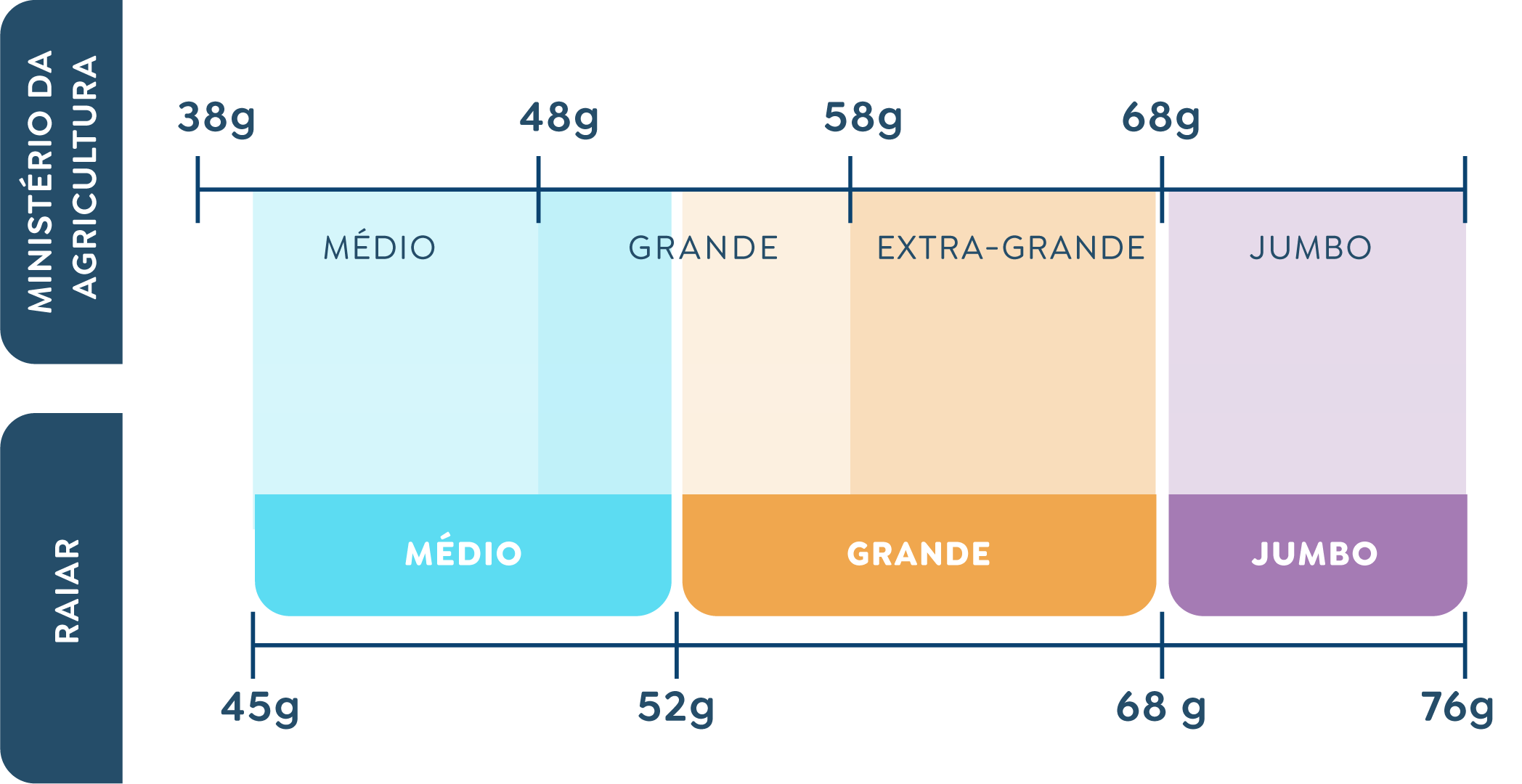
Grading is done by weight: each egg is weighed and sorted into a range. Raiar uses its own ranges, with a minimum weight higher than the Ministry of Agriculture recommends.
Shell
Are brown eggs more nutritious than white ones?
No. Shell color depends only on the hen's breed: red-feathered hens usually lay brown eggs, and white hens lay white ones. Inside, nutritional value comes down to how the hen is raised.
Why do some eggs have paler, speckled or rough shells?
Variations in tone, speckles and texture are natural. They change with the hen's age, breed and even the season, and don't affect egg quality.
Should I wash eggs before storing them?
No. The shell has a natural protective coating that helps keep bacteria out. Washing removes it. If needed, wash only right before using.
Yolk and white
What determines yolk color?
The hen's diet. Natural pigments in grains like corn make the yolk more yellow or orange. Color alone doesn't tell you whether an egg is more nutritious or comes from a free-range hen.
The white looks cloudy. Is something wrong?
Quite the opposite: a slightly cloudy white means a very fresh egg. Over time, natural carbon dioxide escapes through the shell and the white turns clearer.
What about that little red spot on the yolk?
It's a tiny blood vessel that burst while the egg was forming. It's natural, doesn't mean the egg is fertilized and is harmless. If you prefer, remove it with the tip of a spoon.
What is that white strand attached to the yolk?
Those are chalazae, protein cords that keep the yolk centered inside the egg.
Storage
Fridge or counter?
Both work, but eggs last longer in the fridge. The key is not to switch: once refrigerated, keep them there, because temperature changes make the shell “sweat” and let bacteria in more easily.
In the door or inside the fridge?
Inside, and out of the paper carton so moisture doesn't build up. The door isn't recommended because it goes through more temperature swings and small jolts every time it's opened.
On the farm
Does a hen need a rooster to lay eggs?
No. Hens lay eggs naturally, with or without a rooster. There are no roosters at Raiar, so the eggs that reach your table are not fertilized.
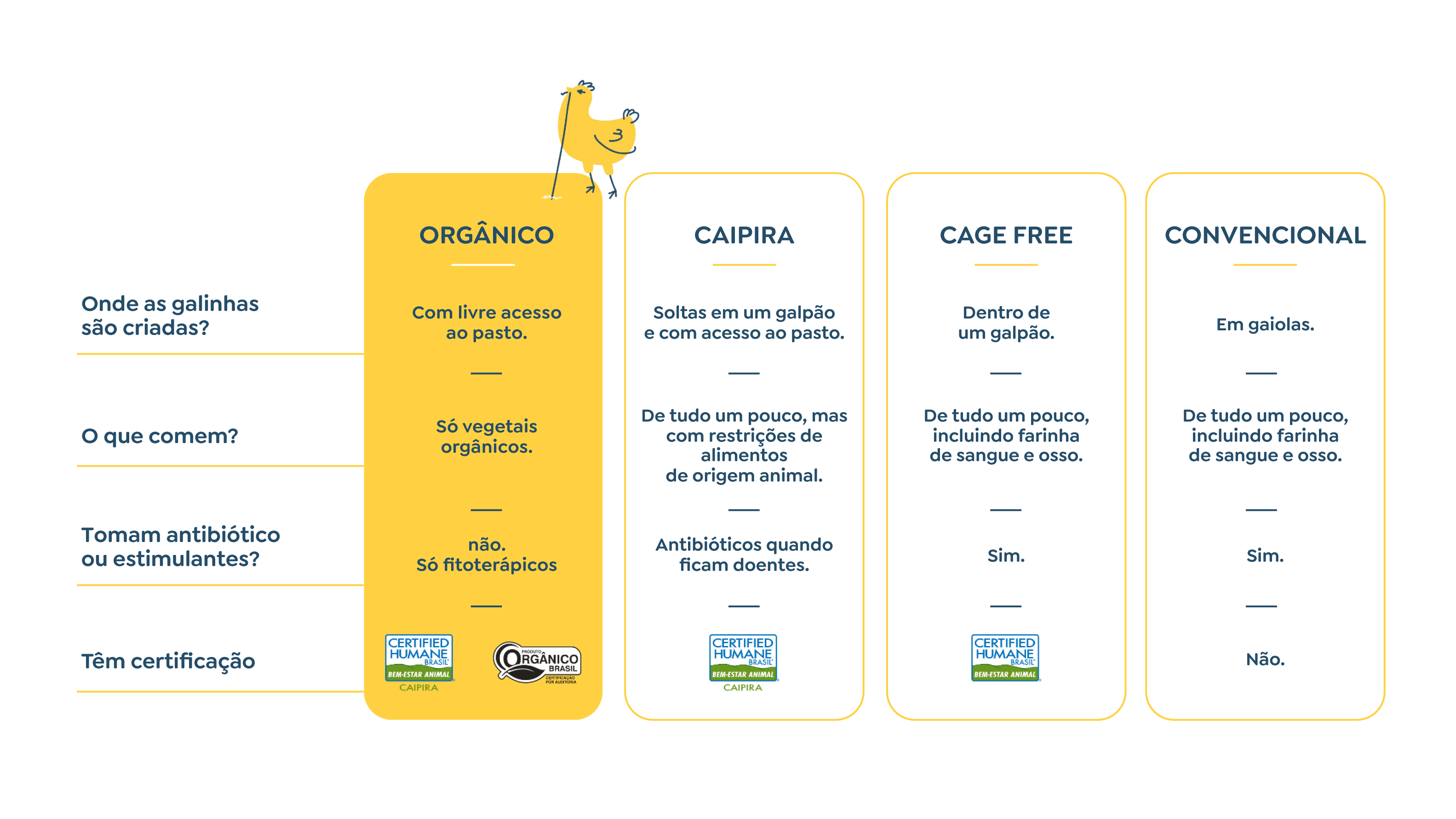
What's the difference between free-range, organic and conventional eggs?
Free-range eggs come from hens raised loose, with outdoor access. Organic goes further: the hens are also free, but eat certified organic and regenerative feed, with no pesticides or GMOs, and production is audited. Raiar eggs are both: free-range and organic.
How many eggs does a hen lay?
On average, about one egg a day, with natural breaks. Each egg takes just over 24 hours to form.